Flat roofs that shed water and stay dry
"Flat" roofs aren't quite flat. They're built with a gentle fall so rainwater runs off to a gutter or outlet. When that fall is wrong, or the covering has aged, water sits on the roof and finds its way in through the smallest split. That's why flat roofs on extensions, garages and dormers are behind so many of the leaks we're called to.
We repair flat roofs where the deck is sound, and replace them where it isn't, using the system that suits your roof: EPDM rubber, GRP fibreglass or a modern torch-on felt.
Signs your flat roof needs attention
- Ponding: puddles still sitting on the roof a day or two after rain.
- Blisters, splits or cracks in the felt, or lifting seams and edges.
- Damp patches on the ceiling below, or mould in the corners of the room.
- A spongy or bouncy deck when walked on, which usually means wet or rotten boards.
- Moss, plants or debris growing on the surface or blocking outlets.
- Leaks where the roof meets a wall, often failed flashing rather than the roof itself.
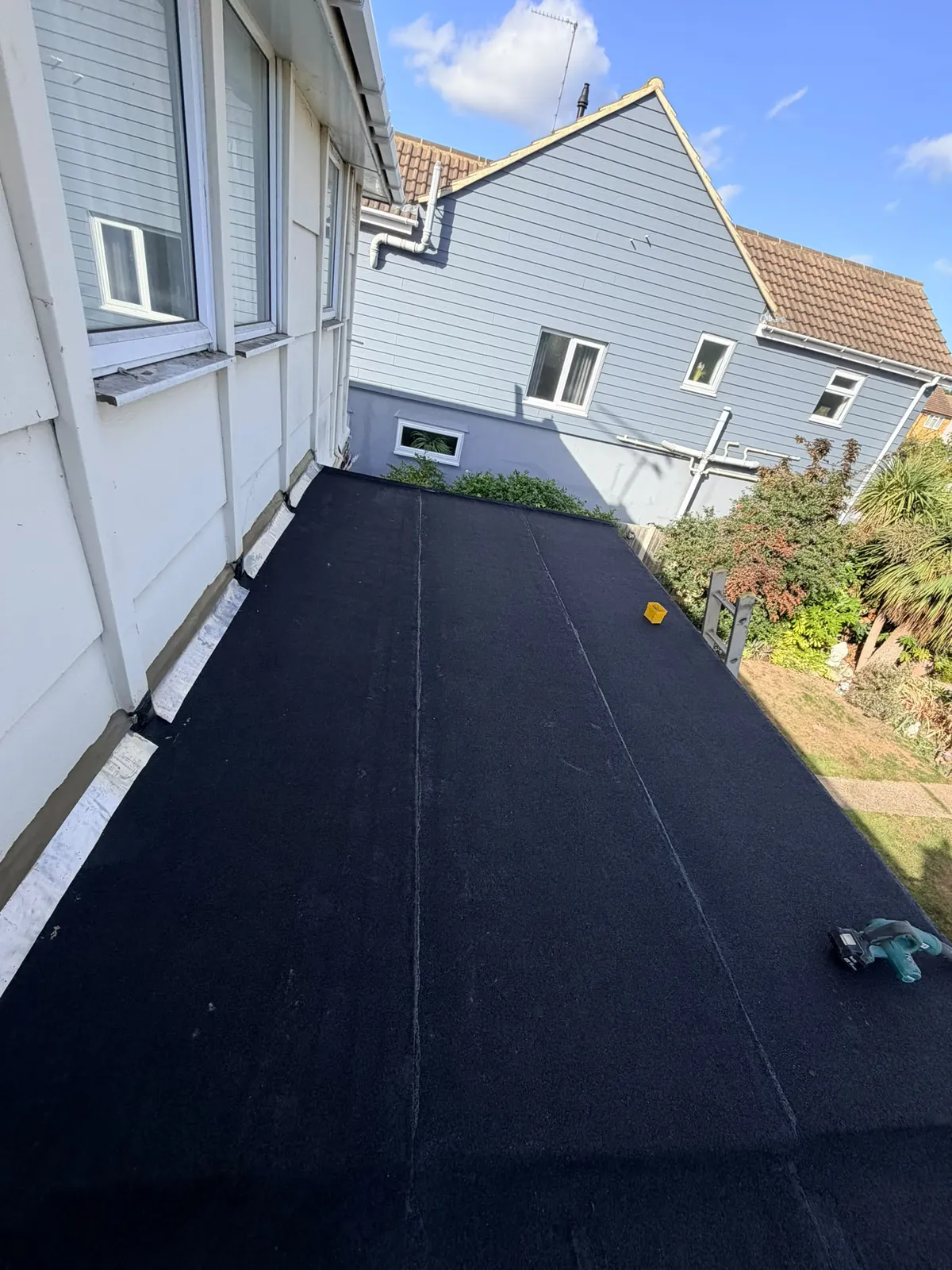
EPDM, GRP or felt: which is right for you?
All three are good systems when they're installed properly. The right choice depends on the shape of your roof, how it's used and how it will look.
| System | Good for | Things to know |
|---|---|---|
| EPDM rubber | Garages, extensions and simple shapes, often in a single sheet with no joins | Flexible and copes well with movement. Matt black finish. |
| GRP fibreglass | Balconies, dormers and roofs with lots of detail or upstands | Seamless, hard-wearing finish. Needs dry weather to lay and cure. |
| Torch-on felt | Like-for-like replacement of existing felt roofs | Modern multi-layer felts are far tougher than old single-layer felt. |
For a deeper comparison of flat and pitched roofs, read flat roof vs pitched roof.
How we replace a flat roof
- Strip off the old covering and check the deck and joists underneath.
- Renew the deck in exterior-grade boards (usually OSB3) where it's rotten or soft, and correct the fall so water runs off.
- Insulate where needed. A replacement is a good time to bring an extension roof up to modern standards with a warm-roof build-up.
- Lay the new covering, with properly formed upstands, edge trims and outlets.
- Flash it in where the roof meets a wall, using lead or a matching system flashing.
- Clear up and photograph the finished roof.
Flat roof repairs
If the deck is dry and sound and the covering has only failed in one spot, a repair is often the right answer: re-bonding a lifted seam, patching a split, renewing a flashing or clearing a blocked outlet. We'll be straight with you if a repair is only buying a little time.
What affects the cost
- the size of the roof and how easy it is to reach;
- which system you choose;
- whether the deck needs replacing and whether you want insulation added;
- the number of upstands, roof lights, outlets and edges to detail.
Your quote is a fixed written price. If we find rotten boards once the old roof is off, we show you and agree the cost before going further.
Looking after a flat roof
A flat roof needs a little more care than a pitched one, because water and debris don't run off as quickly. Once or twice a year, and after big storms, check from a window or ladder that outlets and gutters are clear and nothing is sitting on the surface. Keep overhanging branches cut back, don't use the roof as a storage area, and avoid walking on it unless it's built for foot traffic. Catching a lifted edge or blocked outlet early is far cheaper than replacing a wet deck.
How long does it take?
Most garage and extension flat roofs are replaced in one to a few days. GRP needs a dry spell to cure, so we plan those around the forecast.