Repairs that fix the cause, not just the symptom
Most roofs don't need replacing. They need the one thing that's failed putting right properly: a cracked tile, a slipped slate, mortar that's dropped out of the ridge, or a valley that's silted up and overflowing. A good repair costs a fraction of a new roof and can add years to the one you've got.
The trouble is that water travels. A stain over the landing can start a metre or two away, run along a rafter and drip where it finds a low point. That's why we never quote from the ground for a leak if we can help it. We get up, find where the water is actually getting in, and show you the photos.
Signs your roof needs a repair
- Tiles or slates on the ground, or gaps you can see from the street.
- Damp patches or brown rings on upstairs ceilings, especially after wind-driven rain.
- Daylight in the loft, or wet insulation and stained timbers when you look up there with a torch.
- Loose or cracked ridge tiles, or crumbled mortar in the gutters.
- Moss and debris piling up in valleys, so water backs up under the tiles.
- A rattle or flapping noise in high wind, which usually means something has worked loose.
What we repair
Tiles and slates
We replace broken, slipped and missing tiles and slates with the closest match we can find: reclaimed where your roof is older, new where the profile is still made. Slates are refixed with copper or stainless tingles or nails, not glued in place.
Ridges, hips and verges
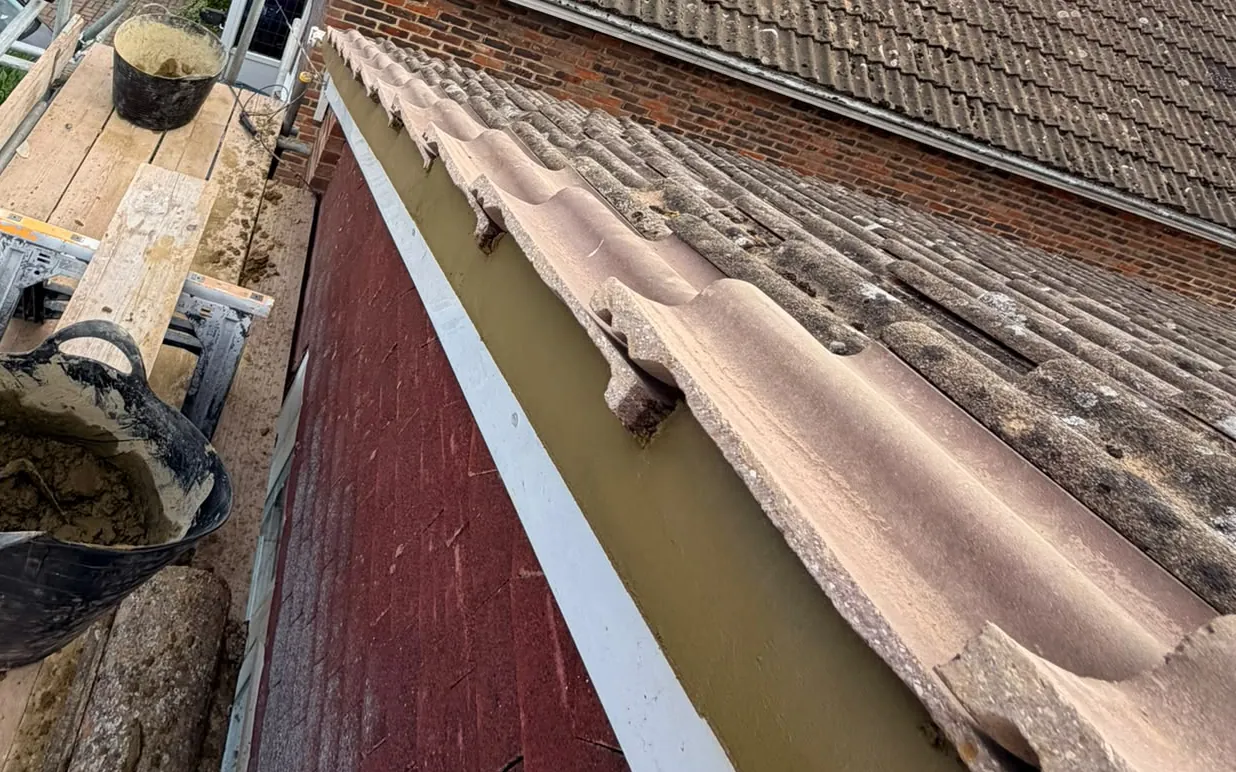
Bedded ridge and hip tiles are lifted, cleaned and re-bedded in fresh mortar, or switched to a mechanically fixed dry ridge and verge system where that makes more sense.
Valleys and flashings
Valleys are where two roof slopes meet and carry a lot of water. We clear them, replace split lead or worn valley troughs, and renew lead flashings where the roof meets a wall or chimney.
Underlay and battens
If the felt under the tiles has perished at the eaves or rotted battens are letting tiles drop, we strip that section back and renew it, rather than slotting new tiles onto a failing base.
How we carry out a roof repair
- Survey. We inspect the roof and the loft where we can, and photograph every problem.
- Quote. You get a fixed written price with the photos attached, so you can see what's needed and why.
- Access. Ladders and roof ladders for most small repairs; a tower or scaffold where the height or the job needs it. We tell you which on the quote.
- Repair. We fix the cause, match the materials, and check the surrounding area while we're up there.
- Clear-up. Old tiles, mortar and debris taken away, gutters cleared of anything we dropped, and photos of the finished work.
What affects the cost of a roof repair
Every repair is priced individually after the survey. The main things that change the price are:
- how much access is needed (ladder work versus a scaffold or tower);
- the type of tile or slate, and whether a match is still made;
- whether the underlay and battens beneath are sound;
- the height and pitch of the roof, and any conservatory or extension in the way.
For typical price ranges, read our guide on how much a roof repair costs. Your quote will always be a fixed figure, in writing.
How long does a repair take?
Most small repairs, such as replacing a handful of tiles or re-bedding a section of ridge, are done in a day or less. Larger jobs that need scaffolding take longer, and we'll give you a timescale on the quote. If the weather turns, we make the roof safe and come back to finish rather than rushing it.
After the repair
Your repair comes with a written workmanship guarantee, with the length stated on your quote. We'll also tell you about anything else we noticed while we were up there, with photos, and whether it needs doing now or can wait. If the roof is near the end of its life and repairs no longer add up, we'll say so honestly and explain the options for a new roof.
Not sure whether you need a repair? A roof inspection gives you a photo report of the whole roof.